From Cycling Infrastructure to Cycling Networks: Highlights from Mobycon’s First French-Language Masterclass
Cities and towns across France have cycling infrastructures – a cycle lane on a major road, a voie verte along a river bank, or a contraflow cycle lane on a quiet neighbourhood street. But how many of them have cycling networks – an intuitive, comprehensive, and connected system for going from anywhere to anywhere on a bicycle? And what is needed to take a French city from cyclable infrastructures to cycling networks?
Mobycon’s first French-language Masterclass earlier this month in Paris was our answer to this question. Working closely with our partner, Benoît Gadiollet from Urbanisme & Mobilités, and with the generous assistance and support of a number of presenters, we organised two days of intensive thinking and designing, learning and problem-solving.
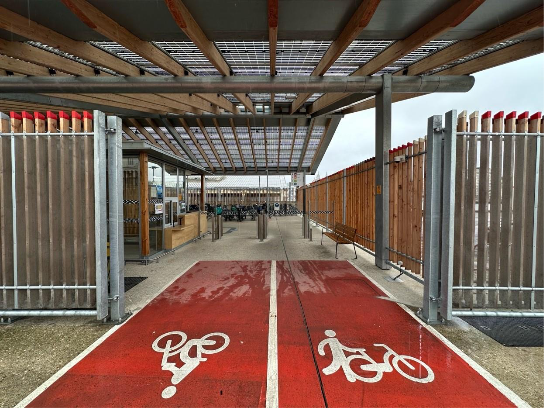
Paris’s new dedicated cycle parking facility at the Gare du Nord – a step up in quality and capacity that brings cyclists to trains in less than 2 minutes.
A Fusion of Expertise
This session, which we aim to repeat in Paris every year from now on, was a distillation of more than 40 years of Mobycon’s Dutch-inspired approach to cycling, as well as Benoît’s decades of experience in French mobility planning, with a focus on cycling planning in the last 10 years. Our presenters enriched the programme with their specific everyday experiences. Isabelle Lesens spoke of her experience as a councillor in Paris’s 15th arrondissement. She commented on the successes and failures of cycling infrastructures in her territory and elsewhere contribute to creating a consistent, intuitive, and logical experience for cyclists – which in turn makes their movements easier for other road users to anticipate. Clementine Gourdel and Vincent Sadot are cycle trainers, an often-overlooked part of the ‘cycling ecosystem’. They spoke of how much they had learned from watching people, especially children, make their first contact with the experience of cycling, and how their confidence in using the road shaped their broader experience of the city. Elliot Attié and Simon Fessard spoke of their challenges and successes in delivering cyclable networks in Bourg-en-Bresse (42,000 inhabitants) and Clermont-Ferrand (146,000 inhabitants). While their work at these two scales had much in common, there were challenges unique to the city scale.
Bridging the Gap: From Strategic Vision to Lived Experience
For Mobycon, Anna Tailliez kicked off the Masterclass with a session called ‘Separating fact from fiction in planning cycling cities’ (Le vrai du faux de l’urbanisme cyclable). Her broad vision set an agenda for the two days, helping us to focus our energies on the most promising solutions and knowledge gaps. A key takeaway from this presentation was that the ‘cultural’ context of Dutch cycling infrastructure and networks should be neither under- nor over-emphasised. Culture matters, but it changes quickly, especially when designers find a way to separate the interests of the city as a whole from those of motorists.
Brett Petzer’s first session focused on a simple message: the importance of taking the cyclist’s lived experience and perspective as the sole measure of a good cycling route – the ‘view from the handlebar’. He called attention to the problem of too much compromise in early design phases, as designers of cycling infrastructure try to realise a minimum viable product in contexts where car-dependent urbanism has been the norm for many years.
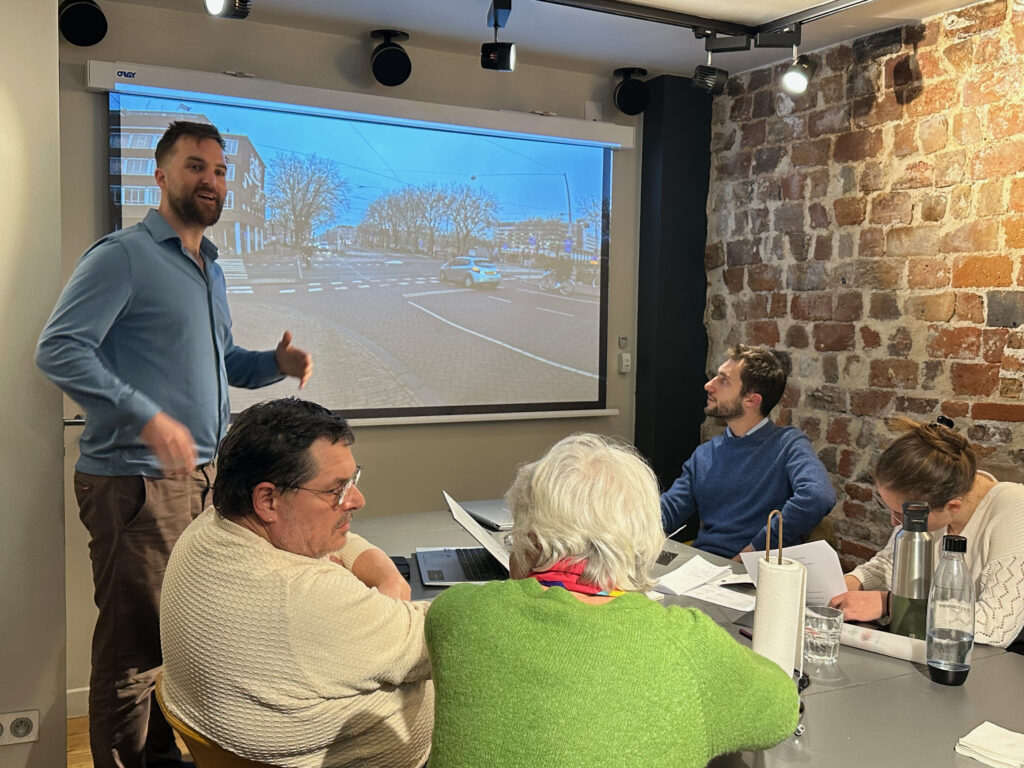
Brett facilitates a discussion with a video of a ‘naked intersection’ (without signs or signals) in Amsterdam.
For Urbanisme & Mobilités, Benoît also took an honest look at productive and counterproductive compromises between the need for direct cycling journeys and the interests of motorists. His other sessions focused on communication and promotion, as well as finding ways to advocate for cycling in France’s forthcoming municipal elections.
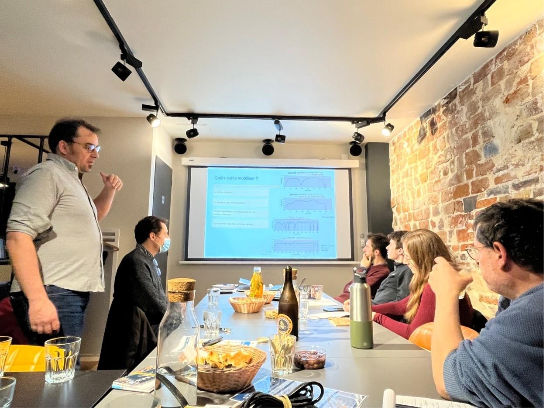
Benoît explains how a powerful ‘data story’ for cycling can be built from limited and incomplete data.
Putting Design Methods to the Test
The Masterclass was highly interactive. On day 1, Anna Tailliez led a detailed group design session in which participants reimagined a complex intersection in the 11th arrondissement. On day 2, Brett led the group in an application of Mobycon’s The Good Street™ design method to a wide, underutilised street nearby. Benoît facilitated a lively roleplay on pro- and anti-cycling discourses that demonstrated just how many hours everyone present had spent in town meetings where cycling is framed as a sport, a hobby, or just a distraction from the ‘real needs’ of ‘real people’.
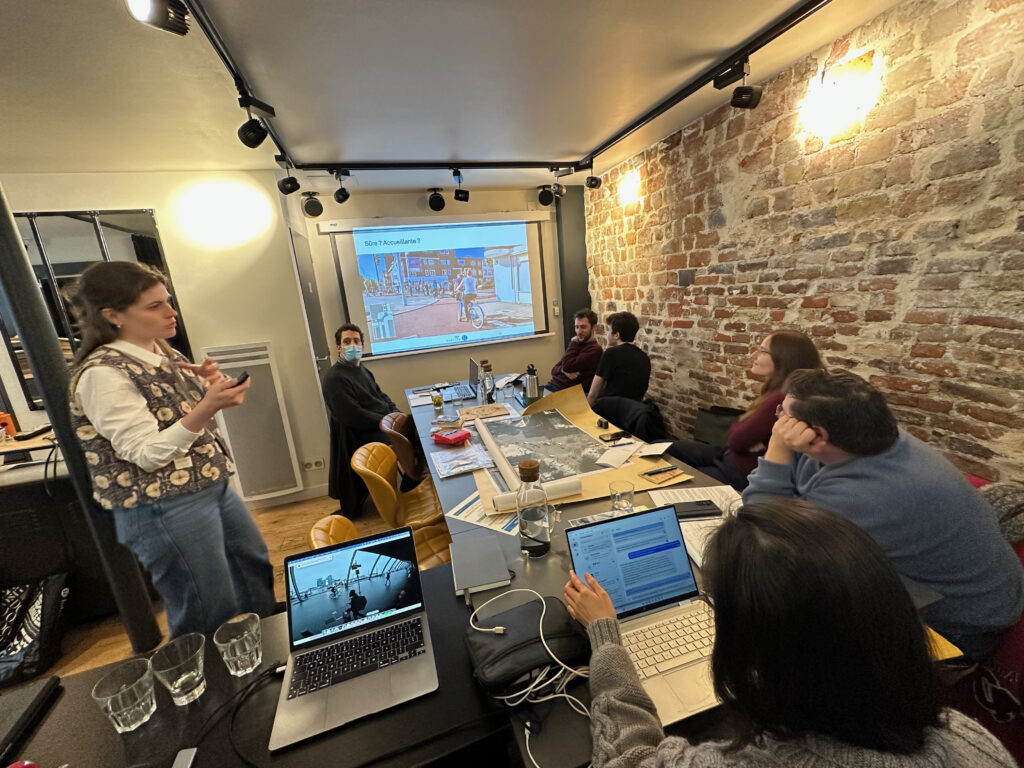
Anna leads the session on the detailed design of complex intersections.
Looking Ahead
In a time where France’s vast ambitions in cycling have already delivered wide and deep transformations of some (but not all) cities and towns, and budgets are threatened, this masterclass left us re-energised. Whatever challenges 2026 will bring for cycling in France, our time in Paris is a reminder that there is an abundance of knowledge, commitment, and passionate people with the skill and energy to sustain the country’s momentum, especially beyond the largest cities.
Ready to turn your city’s cycling infrastructure into a seamless network? Mobycon specializes in delivering tailor-made Masterclasses designed to solve your specific urban challenges. Don’t hesitate to reach out to us. Let’s build the future of your city together!