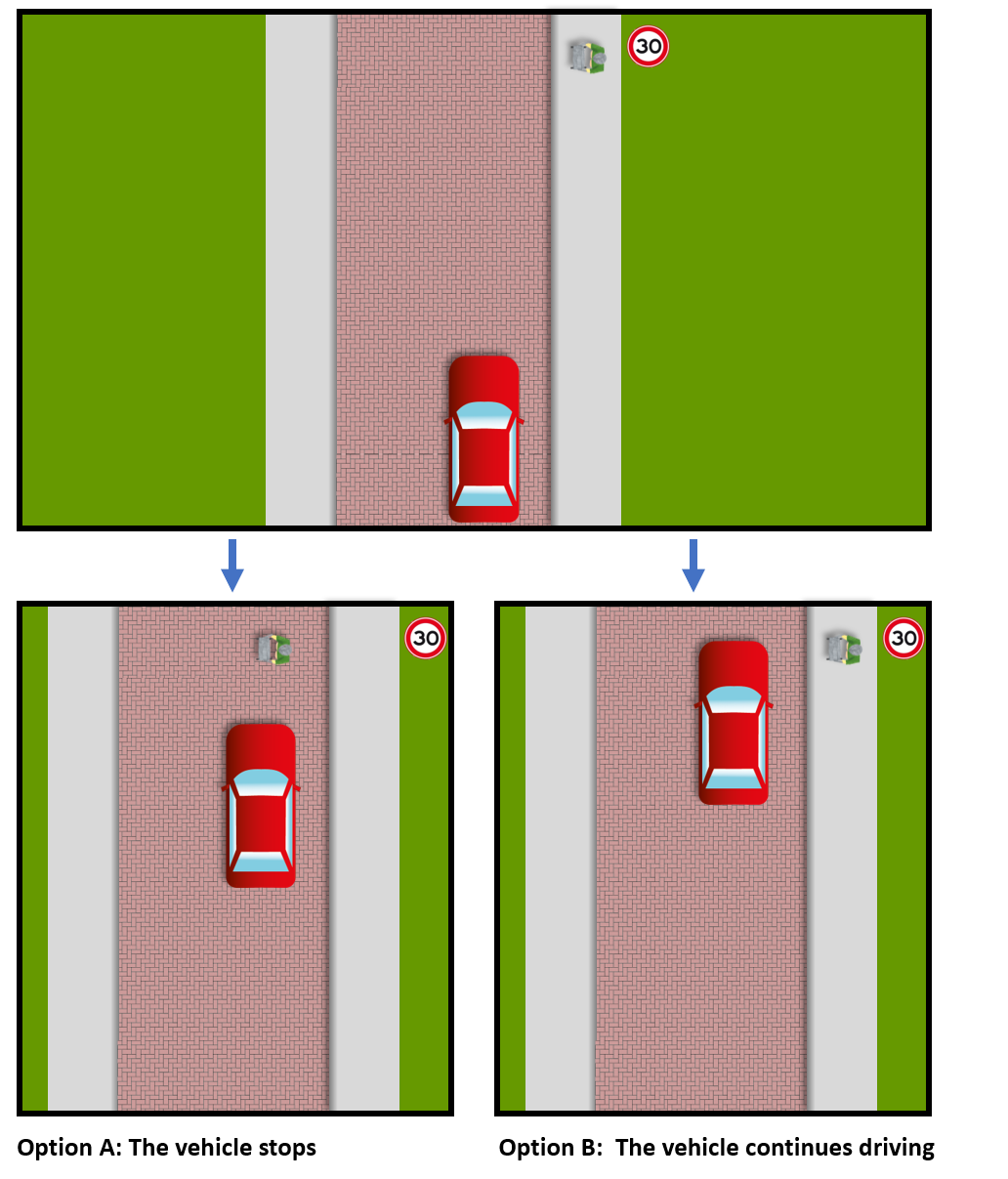
Researchers have already attempted to study our expectations of how autonomous vehicles should behave in exceptional circumstances. These studies cover mostly moral behaviour in extreme situations, like who to sacrifice if a collision is inevitable, but they don’t include commonly occurring driving behaviour, like giving other road users the right of way. However, the issue of how polite we expect the behaviour of autonomous vehicles to be compared with regular car drivers is extremely interesting to address for different reasons:
- When the time comes, it is likely that we may become a passenger of an autonomous vehicle or/and that we will share the road with this new technology. Car manufactures have to develop these cars in such a way that those interactions are comfortable and appropriate. This means that understanding of what level of politeness we expect in the behaviour of these cars is essential.
- The relevance of this question applies not only for development, but also for government regulation of this technology. For instance, the Dutch minister of Transport and Water, states driving licenses for autonomous vehicles must be implemented to ensure that a vehicle will operate safely in traffic. Therefore, verifiable requirements related to the behaviour of these cars must be defined, which might be derived from what level of politeness we expect in their behaviour.
Research must seek to answer the above questions. At this point it is not easy to predict what the answer will be. On one hand, the autonomous vehicles replace human drivers, thus an equal level of politeness in their behaviour might be desired. On the other hand, an autonomous vehicle has the possibility to drive and behave in a better way than humans, and thus they might be demanded to behave in a politer way. However, speculating makes no sense, research will provide us the answer!