Monterey County Charts a New Path for Zero-Emission Shared Mobility
Mobycon is proud to celebrate the adoption of the Monterey County Zero Emissions Shared Mobility Study by the Board of Supervisors. This is a milestone that reflects both bold vision and grounded, community-driven planning. As lead consultant, Mobycon partnered with the Shared-Use Mobility Center and the County’s Sustainability Program to explore how innovative mobility solutions can work in a uniquely diverse and complex U.S. context.
This study asks a simple but powerful question: what if getting around Monterey County didn’t require owning a car?
A System of Solutions, Not a Single Project
Rather than focusing on a single intervention, the plan proposes a coordinated ecosystem of shared mobility options designed to work together. At its core is a network of mobility hubs as places where transit, shared vehicles, micromobility, and community services come together.
From these hubs, a suite of services expands access across the county:
Shared micromobility systems (e-bikes, scooters)
Community e-bike libraries for smaller and rural communities
Electric car share programs for longer or more complex trips
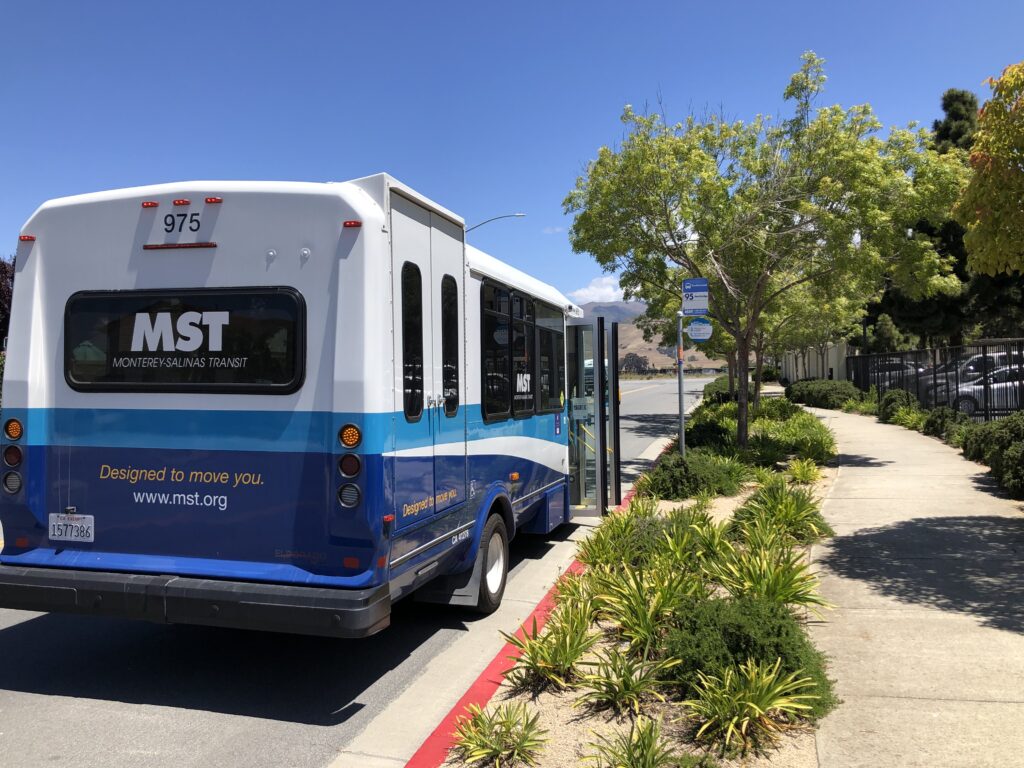
Expansion of the Monterey Trolley to provide free, clean transit
A Big Sur shuttle concept to connect people to nature without relying on private vehicles
Together, these strategies create a flexible, scalable system that reflects real travel patterns and supports key industries like agriculture, tourism, and hospitality. This is innovation grounded in practicality by bringing together emerging mobility tools with the realities of rural distances, workforce travel, and existing transit networks.
Designed for the U.S. Context
Shared mobility is often discussed in dense urban environments, but Monterey County presents a different challenge: a mix of small cities, agricultural communities, and popular destinations connected by long travel distances.
The plan responds directly to these conditions. For example, community e-bike libraries provide access where traditional bike share may not be viable. Mobility hubs are scaled from major hubs regional centers to small neighborhood “mini hubs”, allowing the system to adapt to both urban and rural settings.
Grounded in Real Community Voices
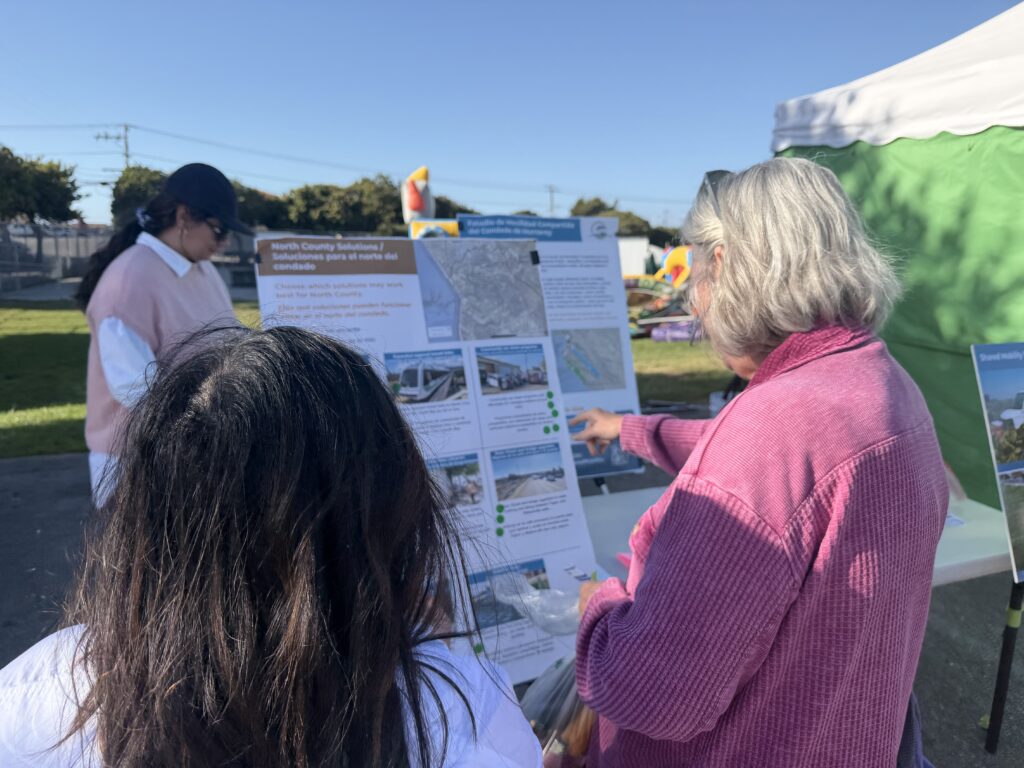
A defining feature of this project was its commitment to on-the-ground engagement. Despite working as a globally distributed team, Mobycon prioritized being physically present in Monterey County for listening, learning, and building trust.
The engagement process included:
Pop-up events at farmers markets, community spaces, and along the waterfront
Focus groups with community organizations
Two rounds of in-person community forums across multiple cities
Advisory committees connecting agency staff, advocates, and community leaders
Countywide surveys capturing both existing travel behavior and reactions to proposed solutions
This approach ensured that recommendations were not abstract ideas, but responses to people’s lives. Community members highlighted limited travel options, long travel times, and an over-reliance on driving. In response, the plan prioritizes affordability, reliability, and flexibility, the key ingredients for real mode shift.
Creativity Meets Implementation
While the recommendations are ambitious, they are also designed to be implementable. The study outlines pathways for pilot projects, partnerships with local organizations, and scalable deployment strategies.
Importantly, it frames these investments as part of a broader transition of supporting zero-emission fleets, reducing vehicle miles traveled, and improving access to jobs, services, and natural destinations.
A Model for What Comes Next
Monterey County’s Zero Emissions Shared Mobility Study offers a compelling model for communities across the U.S. It shows that innovative mobility solutions are not limited to large cities, and that with the right combination of community engagement, technical rigor, and creative thinking, new systems can take root anywhere.
For Mobycon, this project reflects what we strive to do: bring global best practices into local contexts, grounded in real-world conditions and shaped by the people who will use them. Do you want to find out how we can help your community? Get in touch with us!
Do you want to take a deeper dive into this project? Learn more by viewing the full report below or the project website!