Putting Cyclists First: How Rotterdam Is Rewriting the Rules for Construction
From frustration to success: how a policy shift completely changed the game for urban mobility.
This article is written by Nick Klaverdijk from Mobypeople. Nick works directly on these mobility challenges within the municipality of Rotterdam, ensuring that the city’s goals are translated into practical, safe solutions on the street.
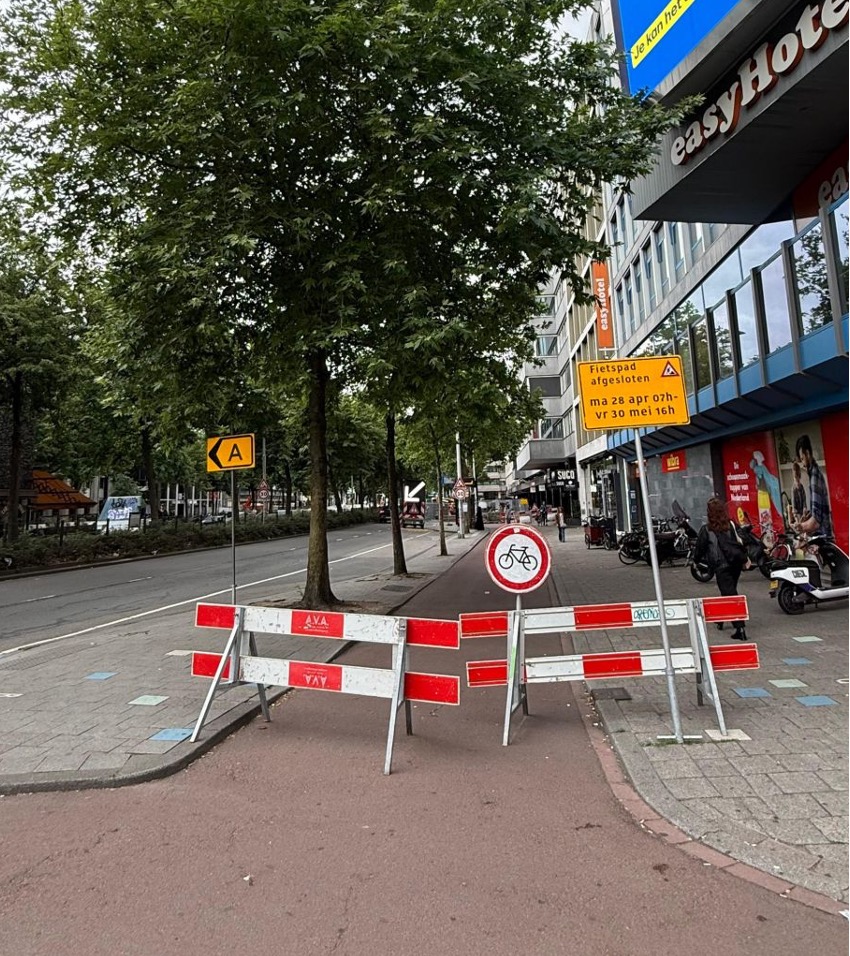
Once upon a time, cyclists in Rotterdam were an afterthought. When constructions began, contractors would simply drop a few fences, slap on a “Cyclists Dismount” sign, and consider the job done. But for the thousands of cyclists traveling around the city daily, the reality was different: frustrating detours, dangerous maneuvers, or the total abandonment of cycling.
This did not just frustrate residents, but also many staff members within the municipality of Rotterdam, who watched as cyclists bypassed barricades, hopped onto sidewalks, and risked their safety on busy roadways. It was clear that the standard approach was broken.
The Decision That Changed Everything
About a year ago, the City Council made a move that sounds simple but proved revolutionary: cyclists now officially have priority over cars during all construction works.
The focus shifted from asking, “Where do we divert the cars?” to “How do we keep the cyclists moving?”
The difference seems subtle, but the consequences are huge. Rotterdam applied the STOMP method. Prioritizing pedestrians and cyclists first, then public transport, and finally private vehicles. For large-scale projects, this shift means stricter requirements for crash decks and passage widths.
Putting Policy into Practice
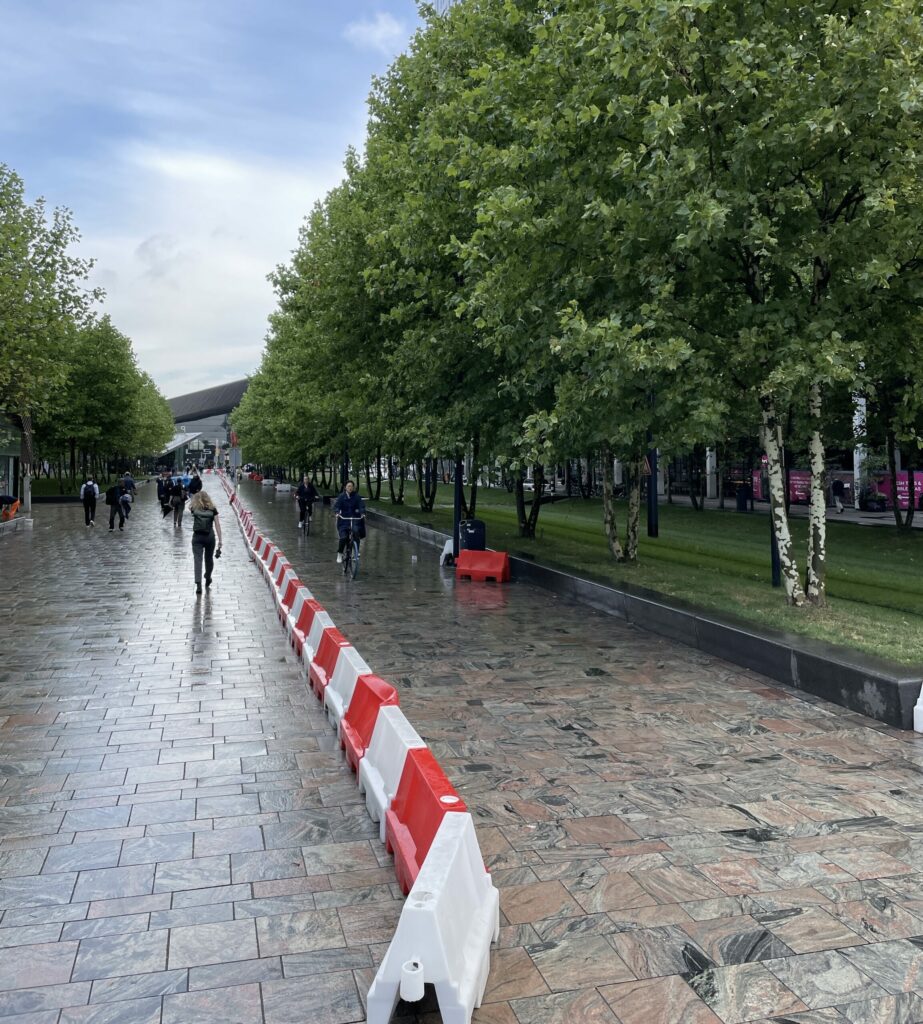
The goal is simple: do not close the cycle path unless a high-quality, seamless alternative exists. Success stories are already emerging. On one project, a temporary three-meter-wide, one-way cycle path was installed. This was an improvement over the original 1.5-meter path that sat unprotected next to car traffic.
Another successful example seen in cycling cities like Copenhagen and Malmö is the use of shipping containers as protected “tunnels” for cyclists, allowing them to pass through a site without taking a single detour.
Learning Through Execution
Change isn’t without its growing pains. Even a good idea can fail without proper execution. Take a recent detour that went viral on LinkedIn. Critics called it a “figure it out yourself” mess. Upon review, Rotterdam realized the intent was to prioritize cyclists, but the signage was so confusing that the message was lost. A humbling reminder that the best detour in the world is useless if the signage isn’t crystal clear.
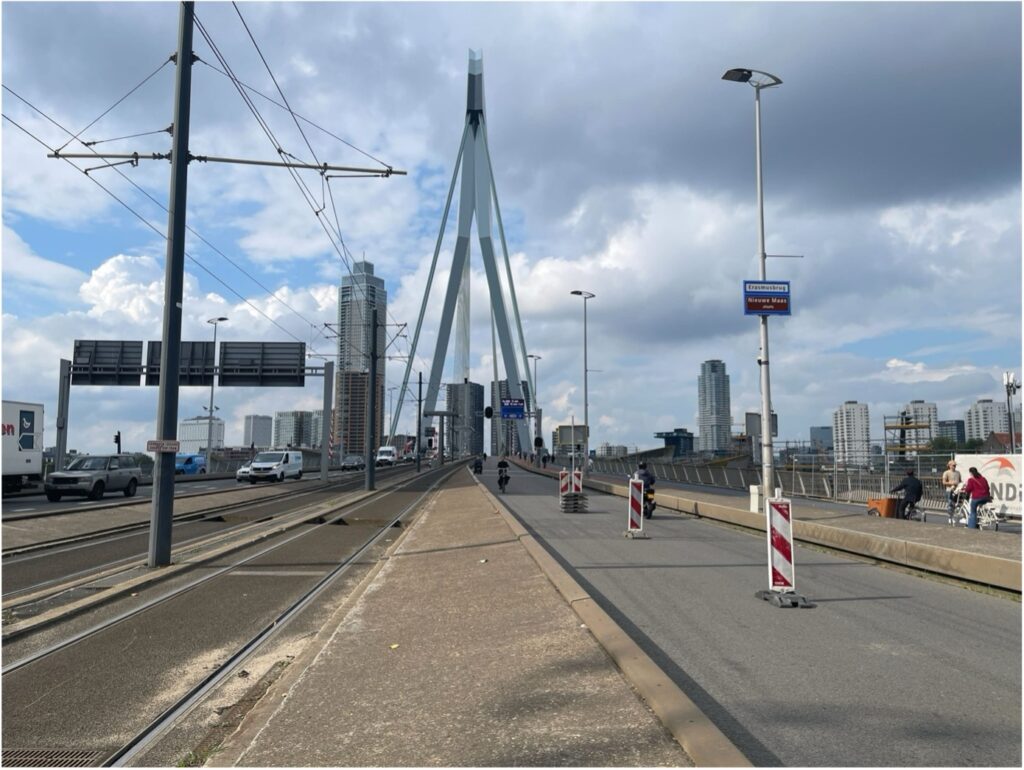
A more successful example of this priority in action was the asphalt maintenance on the Erasmus Bridge. By allowing cyclists to take over a roadway lane while diverting cars to the nearby William Bridge, the city demonstrated its commitment to maintaining cycling flow even on its most vital arterial routes.
The Challenges Ahead
Despite the advances, the city of Rotterdam acknowledges that obstacles remain. One of them being that a significant number of cyclists still bypass roadblocks or move safety fencing, even when traffic controllers are present. Another obstacle is that while large projects have adapted well, hundreds of smaller utility repairs (sewer and heating networks) still tend to rely on “easy” solutions. The city is increasingly prepared to reject project permits if the proposed cycling facilities do not meet its standards.
A Year of Progress
One year after the policy change, Rotterdam has demonstrated that construction works do not have to be a deterrent to cycling. Instead, they can serve as a catalyst for temporary urban innovation.
While work continues to refine contractor collaboration and user signage, the fundamental shift is permanent. Rotterdam is no longer a city that works around the cyclist, but a city that builds for them. Every roadblock is now an opportunity to show that Rotterdam takes its cycling ambition seriously.
Would you like to turn street construction in your city into an opportunity for cycling rather than a barrier? Reach out to us and find out how we can help you prioritise cycling during construction with policy, standards and communication.