Rail Trails and the “transportation” aspect of active transportation
A couple of months ago, I joined the Delft office as an International Communications intern. Originally from Cambridge, Massachusetts, I moved to the Netherlands from the US last August to pursue a Master’s in Urban Studies at the University of Amsterdam. I’m passionate about mobility and its role in creating more sustainable and equitable cities.
In the US, the firm division between recreation and transportation pervades the design of our mobility networks. Our cities are often characterized by busy urban corridors that prioritize the efficient movement of cars, transit, and cycles (if we’re lucky), with the occasional park or recreational trail added in as an afterthought. The recreational space rarely improves people’s mobility, and navigating a busy road is rarely enjoyable.
We shouldn’t have to choose, though: by integrating recreation and mobility, balancing place and flow, we can create a transportation network that offers both broad accessibility by cycle and a pleasant way to travel.
To do so, cities must center active transportation on land-use and mobility planning. Walking, rolling, and cycling must be taken seriously as modes of transportation—not just hobbies—and their recreational benefits should be synthesized with other uses to create pleasant journeys out of day-to-day trips. By facilitating active mobility, we can build not only more sustainable cities, but more equitable ones as well.
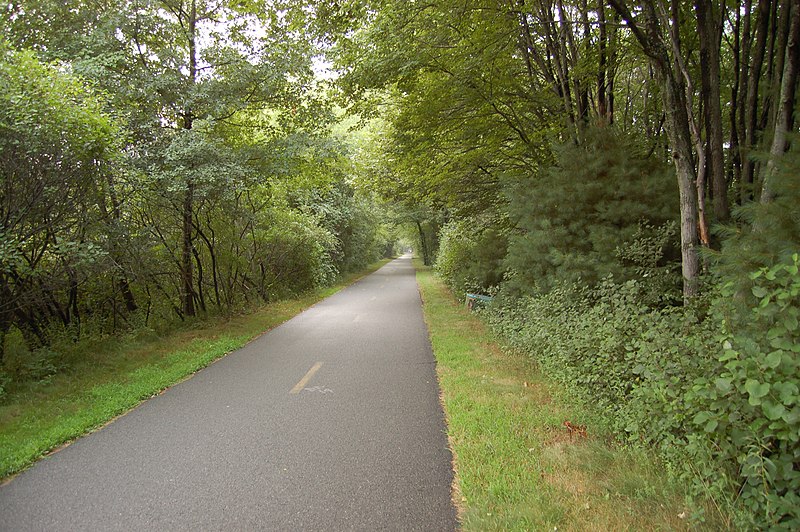
One afternoon last summer, the latter point was made painfully clear to me. I was cycling along the Minuteman Bikeway, a 10 mile long abandoned rail corridor that’s been converted into a multi-use path through Boston’s inner suburbs. I’d just stopped at a bench to rest when an older woman walked up.
When I responded that I did, she sounded grateful. After retiring from her career in China, she had moved to the US in early 2020 to help her sister look after their aging parents. Due to COVID, she’d been stuck there for nearly two years.
“我都烦死了,” she told me: It’s driving me crazy. She lived at her parents’ home in Lexington, close to the bikeway but far from everything else, and she didn’t have a car or a license. Occasionally, her sister would come by to drop off groceries for her and her parents, and on the weekends—when her sister had time to drive her—she was able to explore Cambridge or Boston. On weekdays, though, her adventures were limited to short walks along the trail. She asked me if I knew any shops she could walk or cycle to nearby, or if there was anywhere else worth visiting. I couldn’t think of anything.
For miles in either direction, the only things around were other people’s houses, and the presence of a bike trail does nothing to reduce mobility poverty faced by those without a car. While rail trails are great amenities that add much-needed green space to urban areas, they rarely enhance people’s mobility by facilitating useful trips, especially in car-oriented environments.
Transforming places around walkability and cyclability is no easy task, but it’s a necessary one, and it starts with expanding the notion of mobility beyond car ownership. Achieving mobility happiness—the sweet spot in the mobility donut —requires not only providing opportunities to cycle, but also destinations to cycle to. With that comes the freedom to travel according to your schedule and needs, whether that be for work, school, shopping, or recreation.
">
Rail Trails and the “transportation” aspect of active transportation
In the US, the firm division between recreation and transportation pervades the design of our mobility networks. Our cities are often characterized by busy urban corridors that prioritize the efficient movement of cars, transit, and cycles (if we’re lucky), with the occasional park or recreational trail added in as an afterthought. The recreational space rarely improves people’s mobility, and navigating a busy road is rarely enjoyable.
We shouldn’t have to choose, though: by integrating recreation and mobility, balancing place and flow, we can create a transportation network that offers both broad accessibility by cycle and a pleasant way to travel.
To do so, cities must center active transportation on land-use and mobility planning. Walking, rolling, and cycling must be taken seriously as modes of transportation—not just hobbies—and their recreational benefits should be synthesized with other uses to create pleasant journeys out of day-to-day trips. By facilitating active mobility, we can build not only more sustainable cities, but more equitable ones as well.
One afternoon last summer, the latter point was made painfully clear to me. I was cycling along the Minuteman Bikeway, a 10 mile long abandoned rail corridor that’s been converted into a multi-use path through Boston’s inner suburbs. I’d just stopped at a bench to rest when an older woman walked up.
When I responded that I did, she sounded grateful. After retiring from her career in China, she had moved to the US in early 2020 to help her sister look after their aging parents. Due to COVID, she’d been stuck there for nearly two years.
“我都烦死了,” she told me: It’s driving me crazy. She lived at her parents’ home in Lexington, close to the bikeway but far from everything else, and she didn’t have a car or a license. Occasionally, her sister would come by to drop off groceries for her and her parents, and on the weekends—when her sister had time to drive her—she was able to explore Cambridge or Boston. On weekdays, though, her adventures were limited to short walks along the trail. She asked me if I knew any shops she could walk or cycle to nearby, or if there was anywhere else worth visiting. I couldn’t think of anything.
For miles in either direction, the only things around were other people’s houses, and the presence of a bike trail does nothing to reduce mobility poverty faced by those without a car. While rail trails are great amenities that add much-needed green space to urban areas, they rarely enhance people’s mobility by facilitating useful trips, especially in car-oriented environments.
Transforming places around walkability and cyclability is no easy task, but it’s a necessary one, and it starts with expanding the notion of mobility beyond car ownership. Achieving mobility happiness—the sweet spot in the mobility donut —requires not only providing opportunities to cycle, but also destinations to cycle to. With that comes the freedom to travel according to your schedule and needs, whether that be for work, school, shopping, or recreation.
Related
blog
September 2025
Riding & Inspecting EuroVelo 3: Charleroi to Paris