Rethinking Urban Mobility: Mobycon Highlights from the "Women Changing Cities" German Book Launch
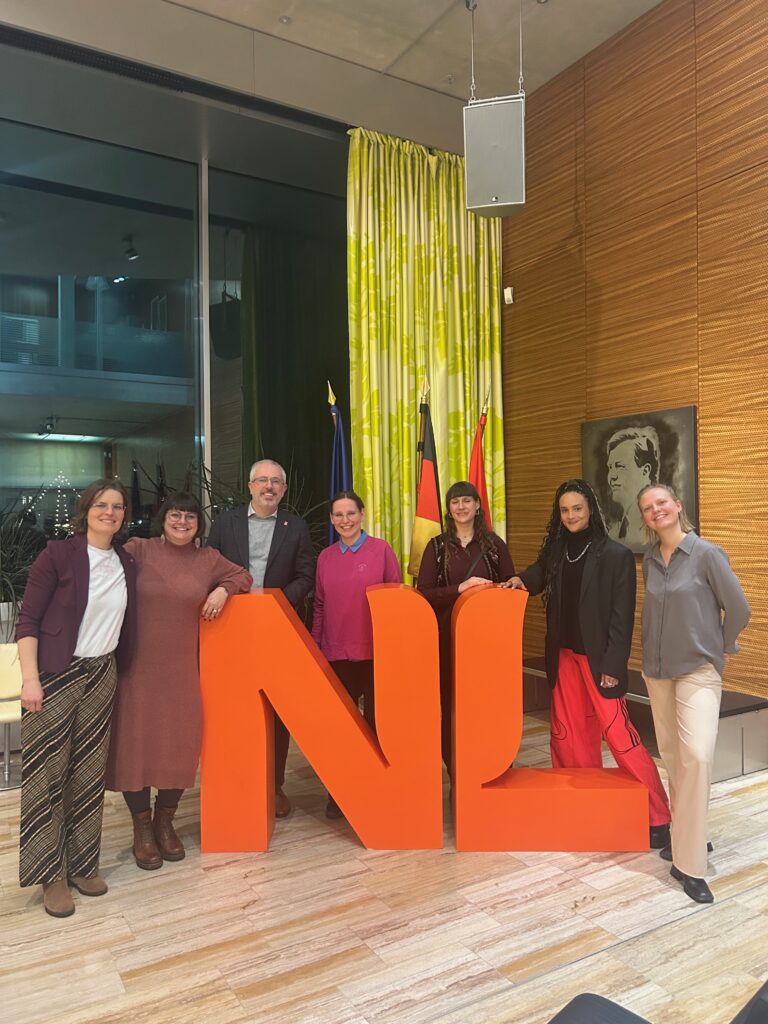
The book event “Women Changing Cities” became a powerful plea for courage, community, and new approaches to mobility. At the Embassy of the Kingdom of the Netherlands in Berlin on February 12, 2026, it became visible what happens when women rethink the urban landscape.
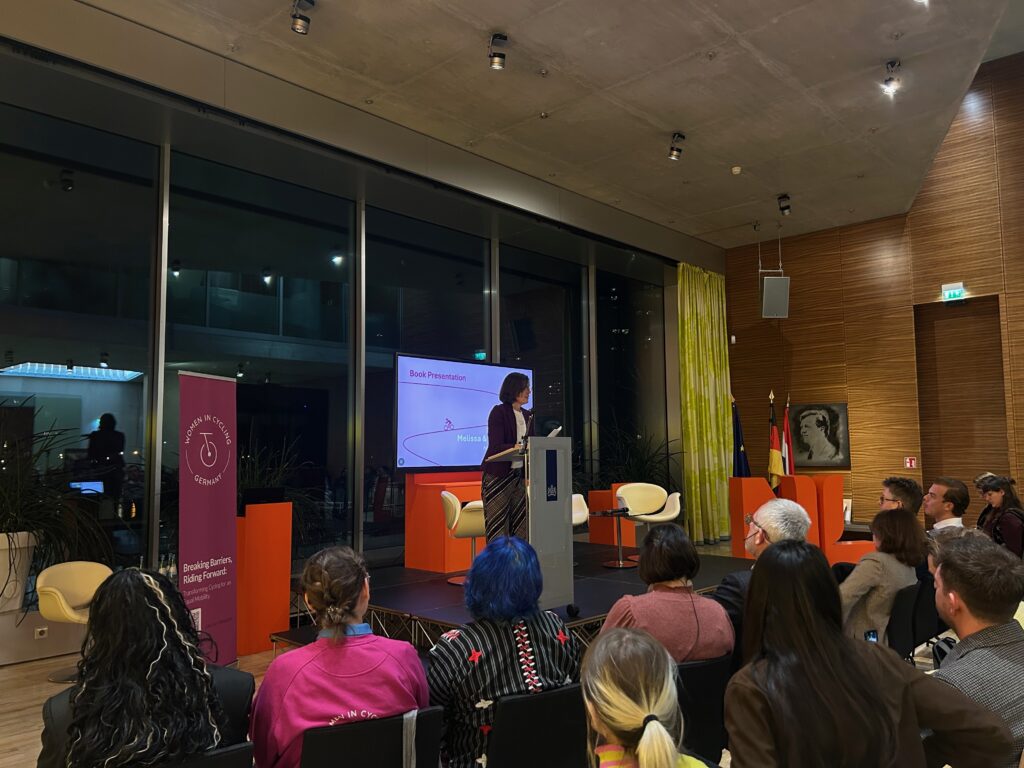
A cold, rainy winter evening in Berlin did not deter a full house. At the Embassy, there was that particular energy in the air that arises when people are not just talking about change, but actively shaping it. Many such trailblazers gathered for the German launch of the book Women Changing Citiesby Melissa and Chris Bruntlett. The work tells the stories of courageous women from twelve cities around the world who reimagined transport systems and set sustainable change in motion.
From Global Stories to a Berlin Stage
The journey began with the research for the Bruntletts’ third book, which brought them to Berlin. When our colleague Dagmar Köhler and Cargobike Jetzt managing director Gina Lacroix heard about the project, they immediately agreed: if the global success stories are being told, they must be shared here in Germany. Together with Women in Cycling Germany, where both serve on the advisory board, the organizational framework was quickly established.
The Embassy of the Netherlands in Berlin served as the perfect host. The venue was fitting not only for its view over the rain-soaked River Spree, but for its symbolic connection: the authors themselves had emigrated from Canada to the Netherlands. The Dutch approach, which views mobility as a key to quality of life, participation, and future viability, provided the ideal backdrop for the evening.
Diplomacy on Two Wheels
Nearly one hundred people gathered to hear Deputy Ambassador Mira Woldberg open the evening. She shared a striking personal story: during her posting in New Zealand, she had traded her official diplomatic car for a bicycle. It diplomatic service was a testament to the authenticity and conviction that defined the entire event.
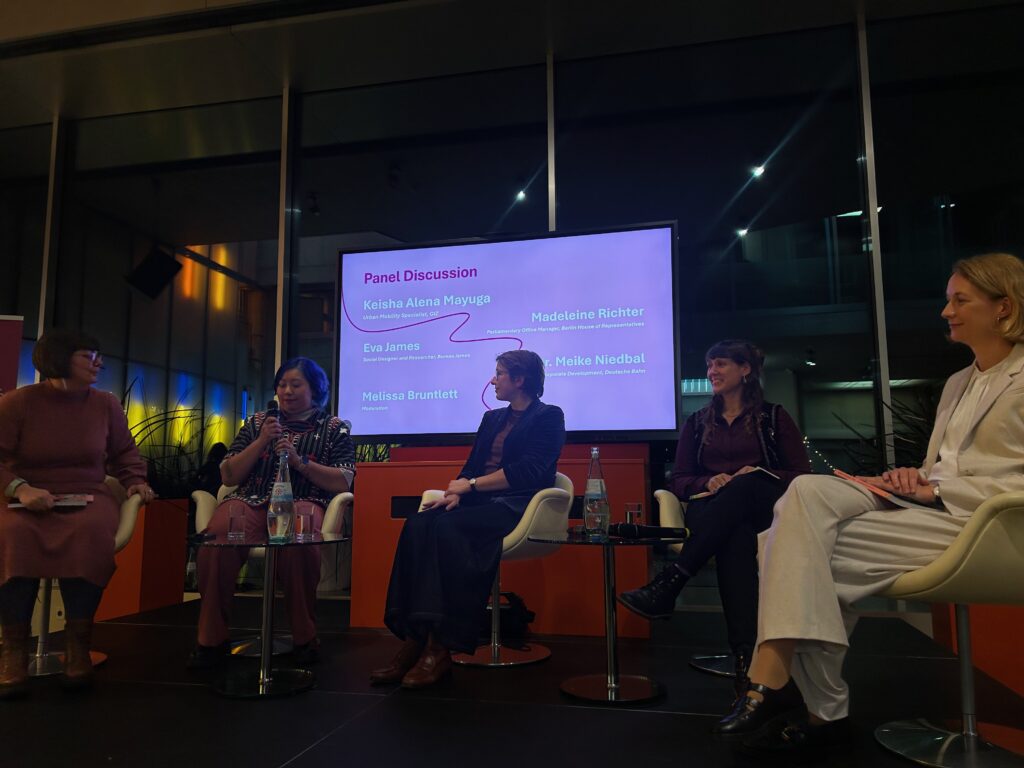
The atmosphere remained vibrant as actress and poet Salber Lee Williams performed an ode to the joy of cycling titled, “This is joy, bro.” This set the stage for a remarkable panel of four women who reflected on the core insights of the book: Eva James (social researcher, Netherlands), Madeleine Richter (Head of Office to Oda Hassepaß, Berlin House of Representatives), Meike Niedbal (Head of Corporate Development at Deutsche Bahn and former State Secretary), and Keisha Alena Mayuga (Move As One Coalition, Philippines, and GIZ advisor).
They explored the patterns behind successful urban transformation, asking the tough questions: Does impact come before power retention? Is empathy a superpower? Who recognizes the true value of care work? And who finally dares to make the uncomfortable decisions required to turn a vision into reality?
A Global Connection: From Berlin to Manila
One of the most powerful moments occurred during the readings by Melissa Bruntlett. Keisha Alena Mayuga, a protagonist in the book, had successfully advocated for pop-up bike lanes in Manila during the COVID-19 pandemic. On the panel, she met former Berlin State Secretary Meike Niedbal and shared a surprising revelation: Berlin’s own pop-up bike lanes had been her direct inspiration.
Keisha had discovered an online handbook explaining how to implement them, which was even available in English. This guide provided transport professionals in the Philippines with the solid, practical guidance they needed to move forward. The rest is history.
The Power of Perspective
Mobyconners Dagmar and Helena left the event with an unusually clear sense of being moved, of pride, and of motivation. Diversity of perspective is not just a debate; it is a lever that changes cities. It reminded them that they are working in the right place, with incredible people, on deeply meaningful projects.
There was an extra layer of pride for them: our colleagues at Mobycon had authored that very handbook on implementing pop-up bike lanes back in 2020. It was an evening that lingers because it demonstrated what emerges when community, expertise, and the courage to embrace new perspectives converge.
Thank you to Melissa and Chris, to the Embassy of the Netherlands, to all the speakers and guests—and above all, to the women and men who make our cities better every day, visible and invisible, in ways both big and small.
Real change happens when we listen to new voices and share proven solutions across borders. At Mobycon, we are dedicated to fostering these global connections and bringing diverse perspectives into urban planning.
Are you ready to rethink your city’s streets? Contact us to learn how our international expertise can help you create safer, more inclusive, and livable spaces for everyone.