Running Reds: Comparing cycling in London and the Netherlands
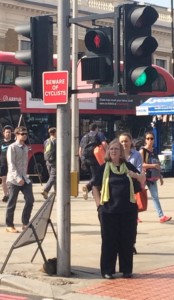
My ethnographic research into London’s cycle culture found things are not much different there. It’s common to see people cycle through traffic lights during the pedestrian phase. In a perfect city, no one would break traffic rules; but quite often, despite being against the law, cutting a red light doesn’t put anyone in harms way.
What separates red light running in London and the Netherlands is the reactions from those on the streets around you. In London I encountered this first hand. On the only occasion I cycled through a red light (by accident, I promise) an onlooking pedestrian shouted “moron” at me. In a similar, but far more violent outburst, I watched a woman slowly pedal through a red light during the pedestrian phase to be screamed at by someone crossing the road. The exact words shouted are too unsavoury to share here. Both instances put no one at risk. In the UK cyclists are a minority that are perceived as an unlawful bunch, with no regard for rules – going through red lights surely fuels this view.
The difference in reaction clearly has something to do with the fact that cycling is so widespread in the Netherlands. Everyone in the Netherlands can empathise with the person who goes through the red light, because we’ve all been on a bike, people understand that it’s not always reckless. I expect it’s comparable to pedestrians in the UK – do people shout abuse at the person who crosses before the light changes green? No.
This poses interesting questions: Do people riding bikes in London have to play by the rules not to fuel negative perceptions of cyclists? Or, should the non-cycling public accept that sometimes it’s safe for bikes to behave differently to cars? Another European capital city, Paris, made it legal for bikes to go through red lights when making right turns, for example.
In no way am I suggesting it’s okay for cyclsits to run red lights and break the law, or that we as transport planners should throw away the rule book just because rules are often broken. I’m simply stating the fact that it happens. And it happens in places with vastly different cycle cultures. By understanding the workings of cycling elsewhere, Mobycon can effectively tailor Dutch cycling knowledge to other settings.