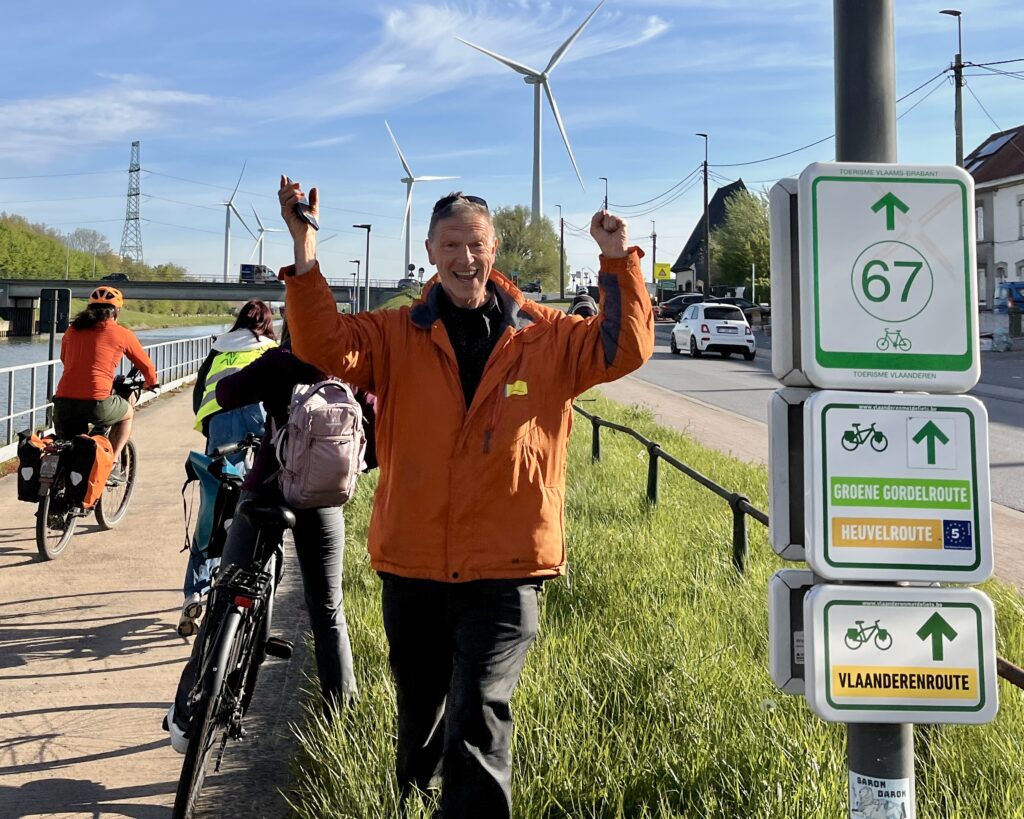
As of today, Anna and David are officially certified to survey the quality of EuroVelo routes, and any other cycling routes, using the European Certification Standard (ECS)methodology. This milestone directly supports ECF’s long-term vision of “more and better cycling for all in Europe”, and hopefully beyond!
The EuroVelo Network & The ECS Methodology
EuroVelo is a network of long-distance tourist cycling routes across Europe. The network currently features 17 routes covering over 90,000 km, with an 18th route between Slovenia and Serbia soon becoming officially part of it! One of the best ways to promote these routes is to certify them through an on-field ECS survey. This survey verifies the level of service and comfort provided to cyclists. However, the ECS methodology is quite a flexible tool. It can also be used to build a framework for brand-new routes, to assess where an existing route needs more investments, and to provide a detailed snapshot of the route and its amenities to give route users an up-to-date inventory.
A Deep Dive into the Field
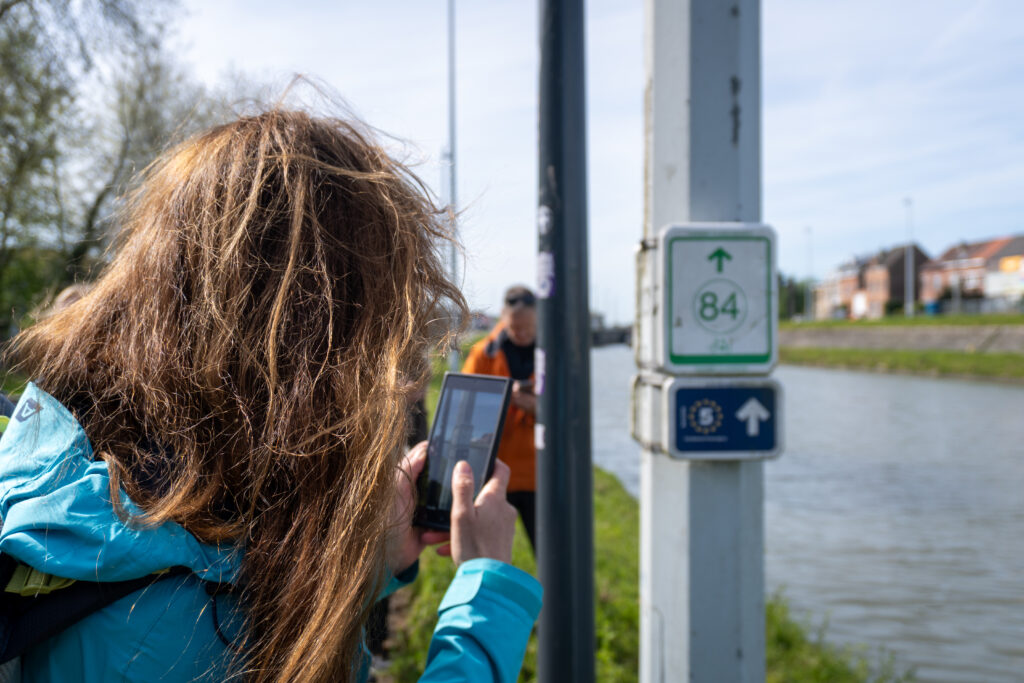
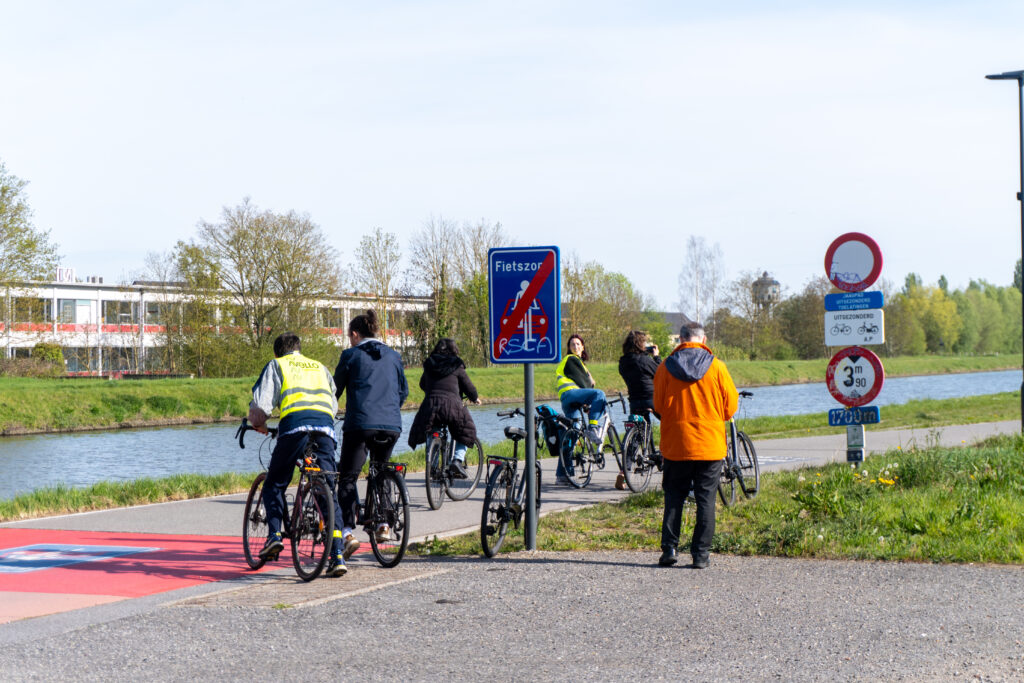
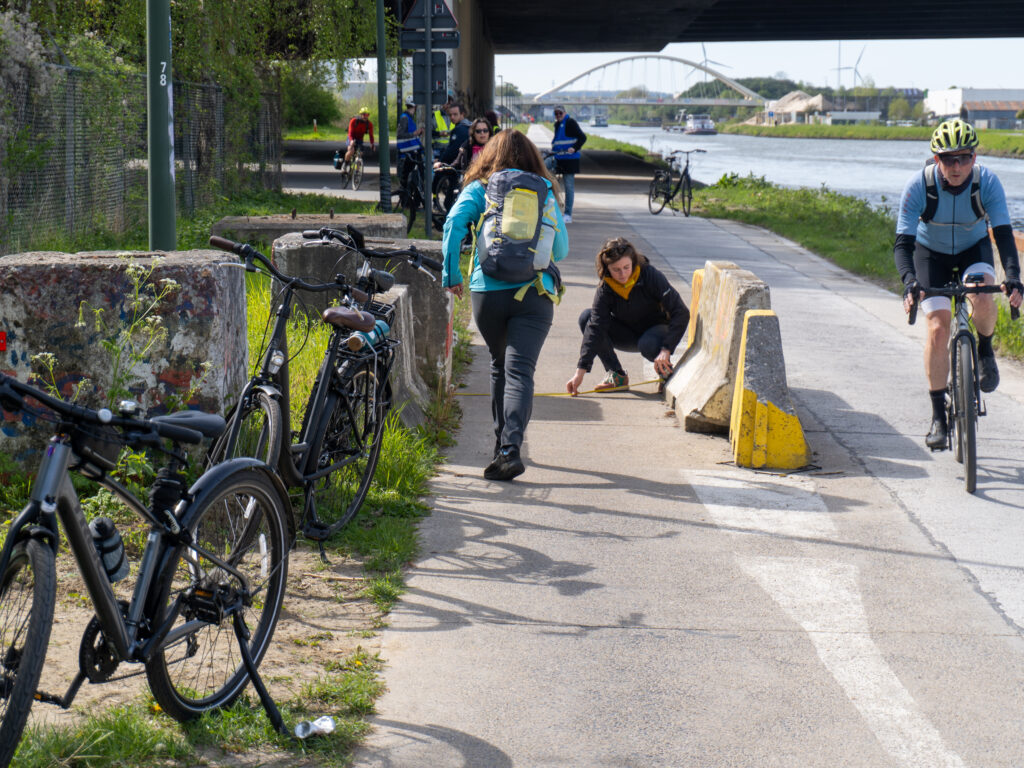
Every year, the ECF organizes several trainings to get more people accustomed to the ECS methodology and its subtleties. Over the course of two days, Anna and David studied the essential parameters that define the quality of a cycling route. This involves looking at a variety of dimensions, including the physical infrastructure, attractiveness, public transport access, availability of services, and clear communication. After the theoretical part, they got to put theory into practice. Using the ECS Survey App, they hopped on their bikes and recorded their first segments along the Kanaal Charleroi-Brussel!
Lessons From the Saddle
One of the most important takeaways from this training is that the ECS methodology is rooted in the cyclists’ perspective. During a survey, an inspector has to step into the shoes of many different users. A seasoned world traveler has very different needs than a family with small children and a bike trailer, or an occasional cyclist trying out the network for the first time.
Moreover, the method is remarkably flexible, working just as well in remote, hilly terrain as it does in urban centers. This way, general input about the quality of a cycling route can be collected, creating an exhaustive inventory of rest areas or signing quality along a route, needed to work towards the EuroVelo certification, among others.
Because of this diversity of purposes, it is important to work closely with different stakeholders involved in your project to define the goals of the survey and the level of detail it should entail.
Last but not least, parts of this survey are necessarily subjective because, well, life is too. What feels comfortable, attractive, or safe varies between individuals. The philosophy of the ECS methodology is not so much about conducting the survey the “right way”, but to provide a consistent and logical assessment backed by expert advice. The diversity of contexts, level of development, and local customs makes it part of the ECS’s integral approach to constantly seek a balance between the user’s needs and the reality.
Let’s Build Better Cycling Routes Together
Are you looking for support to assess your local routes? Or do you want to establish new cycling infrastructure standards? Our certified inspectors are ready to think along to help your cycling network reach its full potential. Get in touch to discuss the possibilities!
">
Anna Tailliez
Mobility Advisor
“Supporting the decarbonised mobility transition, via for example the design of people-oriented walking and cycling infrastructures sounds for me like a very tangible and motivating mission!”



 ">
">