


blog
May 2026
Une nouvelle expertise sur les routes : utiliser le standard européen de certification (ECS) pour améliorer les itinéraires cyclables
Read moreblog
April 2026
401 metro stations with trains every 2–3 minutes, frequent buses everywhere, thousands of taxis, millions of electric mopeds, eight-, ten-, twelve-lane arterial roads, and 600,000 shared bicycles. Welcome to Beijing, the endgame in transportation planning.
Recently, I, Lennart Nout, had the honour of being invited to participate in a World Bank workshop on Active Modes Planning and Design in Beijing, through the Dutch Cycling Embassy. I had heard things about Chinese transport systems. I was not prepared.
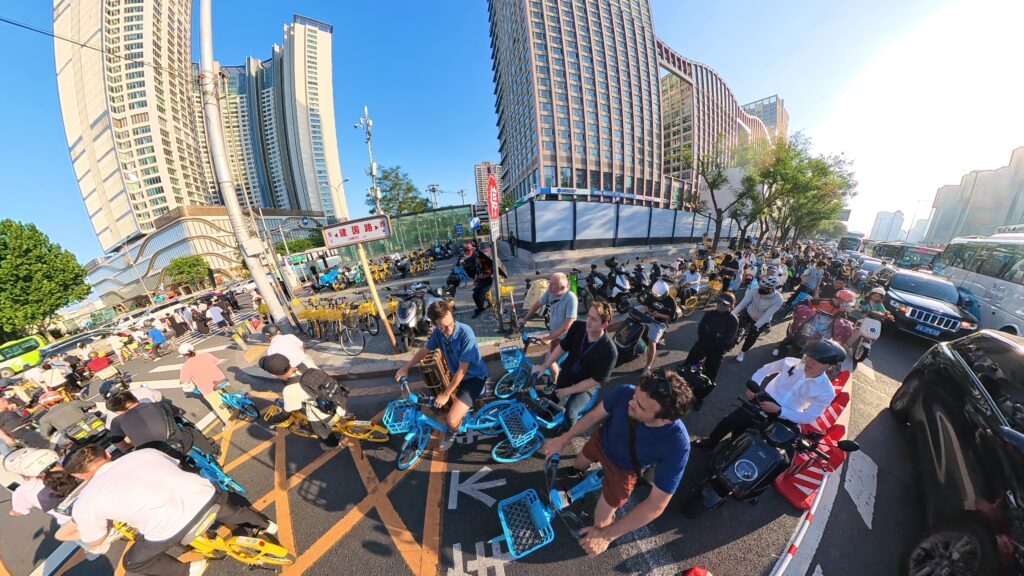
I have run workshops in cities all around the world, but nothing compares to the scale of Beijing’s transport system. Everything is busy, all the time, and it all works surprisingly well. The mode of choice is the metro: clean, efficient, running at extreme frequencies, with an overwhelming number of transfer options. Step out at ground level and you are usually greeted by a sea of shared bikes. In our short survey, around 80% of cyclists were using shared bikes, creating a seamless last-mile connection from the station. If a destination is harder to reach, an electric DiDi is just a few minutes away. Footpaths are generous, well-maintained, and full. The bike lanes are wide, usually protected, and full.
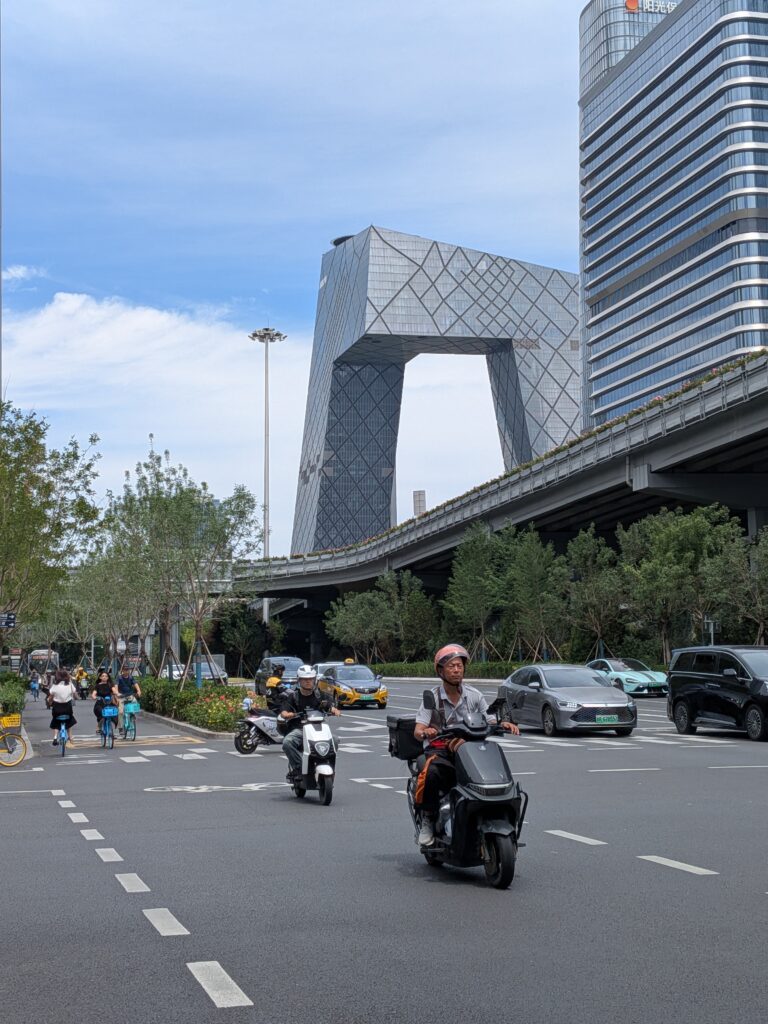
The bike lanes are not just filled with shared bicycles. The real story is the explosive growth of the electric moped; the vehicle of choice for Beijing’s booming delivery sector. These vehicles race through the city, rushed by their algorithms, cutting corners, riding against traffic, doing whatever it takes to reach the next pickup or drop-off. More efficient than a car, certainly, but a growing headache for Beijing’s municipal transport planners: 1 million additional e-bikes joined the Beijing fleet in a single year. How do you accommodate a fast-growing mode without destroying the cycling experience that Beijing is working hard to re-invigorate?
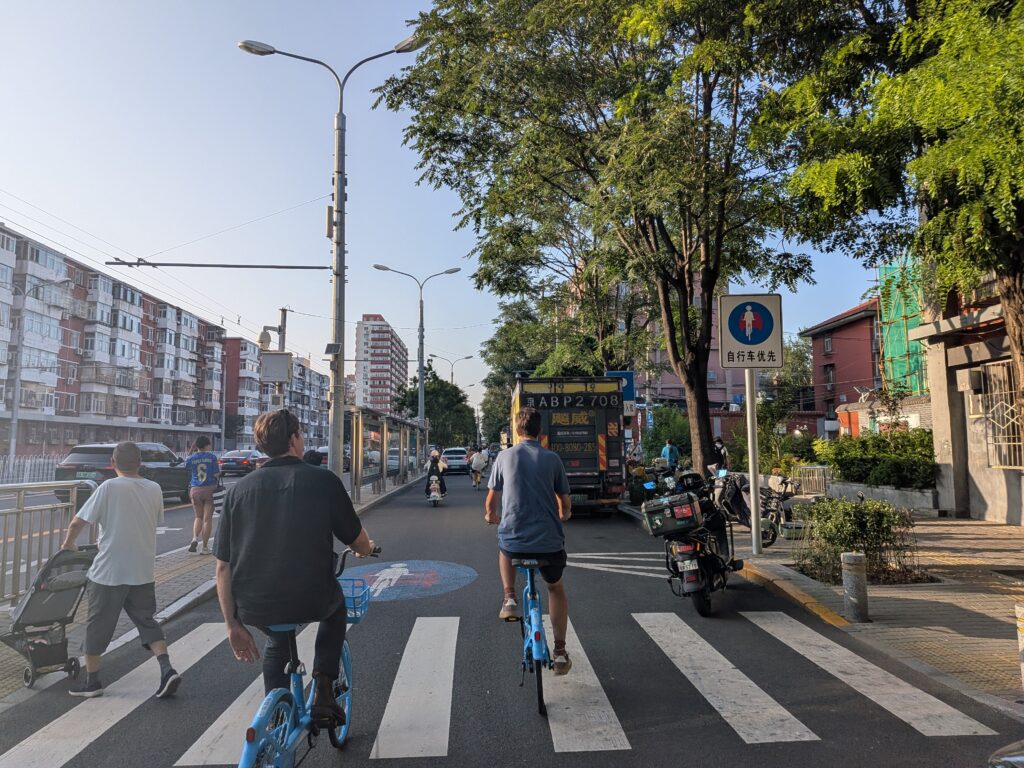
During the three-day workshop, as a focused, high-energy room full of planners, engineers, and decision makers from across China, we worked through this question using Dutch principles of network planning, intersection design, and car management. The answer materialised on day 3, when we analysed a recent upgrade of a major arterial intersection. Looking at the numbers, the answer became obvious. Cars occupied roughly 70% of the road surface, yet moved only around 8% of people. Once you see that, the solution presents itself. This kind of data empowers planners to intervene more decisively, managing car space and reallocating it to modes that actually move people. The solution? Creating a dedicated lane for e-bikes, separate from bicycle infrastructure, all of a sudden was not such a radical idea. It is the logical next step.
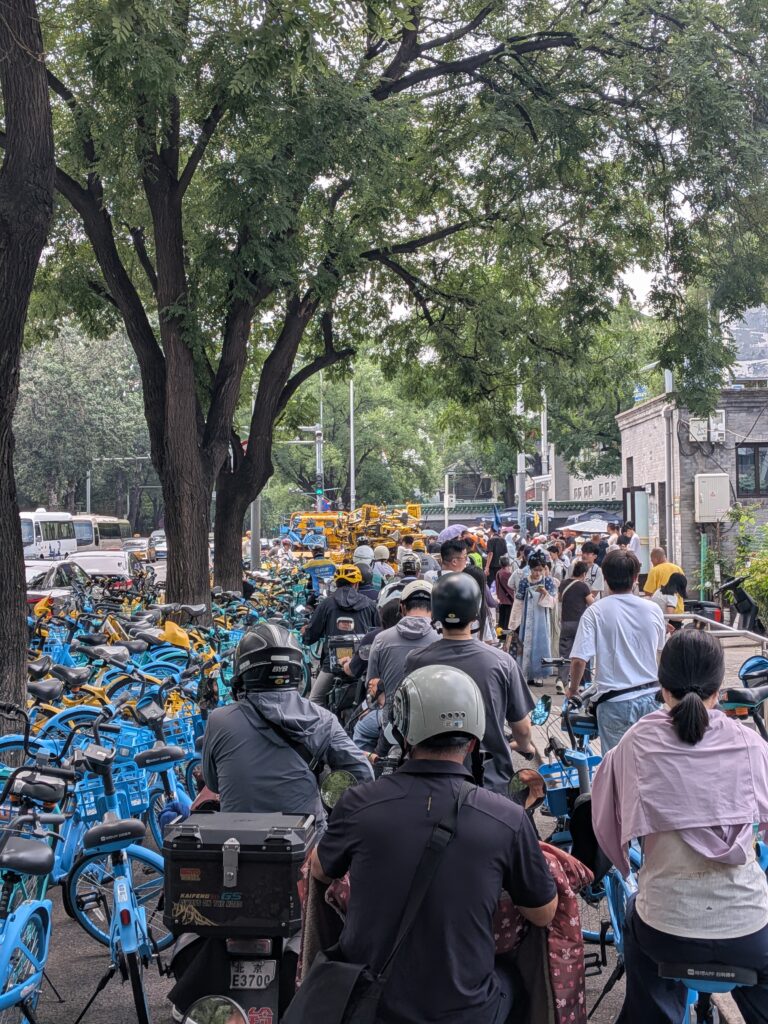
Perhaps Beijing is not the endgame after all. Perhaps it is simply further along the same path that every city is on. Beijing can show us what it means to make a choice and decisively implement separated cycling infrastructure. But Beijing also shows us that more is required. The lesson isn’t that Beijing has it all figured out. The lesson is that when you’re moving this many people, the maths does the arguing for you.
At Mobycon, we specialize in designing tailor-made cycling solutions that fit each city’s unique needs. We help cities build safe, attractive, and accessible cycling infrastructure. Want to explore how your city can become more cycling-friendly? Let’s talk!
 ">
">“The interplay of different modalities within cities intrigues me. I am always looking for the best solution for the city and its inhabitants, while playing close attention to bikes. In the Netherlands and abroad I give workshops on the development of cycling culture, strategic network planning, street design and intersection design.”