


blog
May 2026
What municipalities can learn from a growing Dutch cycling city, and why good mobility is much more than a single bike lane.
When people think of cycling cities in the Netherlands, Amsterdam and Utrecht are usually the first names that come to mind. Zwolle is mentioned less often. Yet, with around 130,000 residents, it has much more in common with the medium-sized cities many municipalities around the globe are working with today. That is precisely what makes Zwolle such an inspiring case: it shows how a growing city can remain accessible, livable, and attractive while reducing car dependency and creating more sustainable travel options.
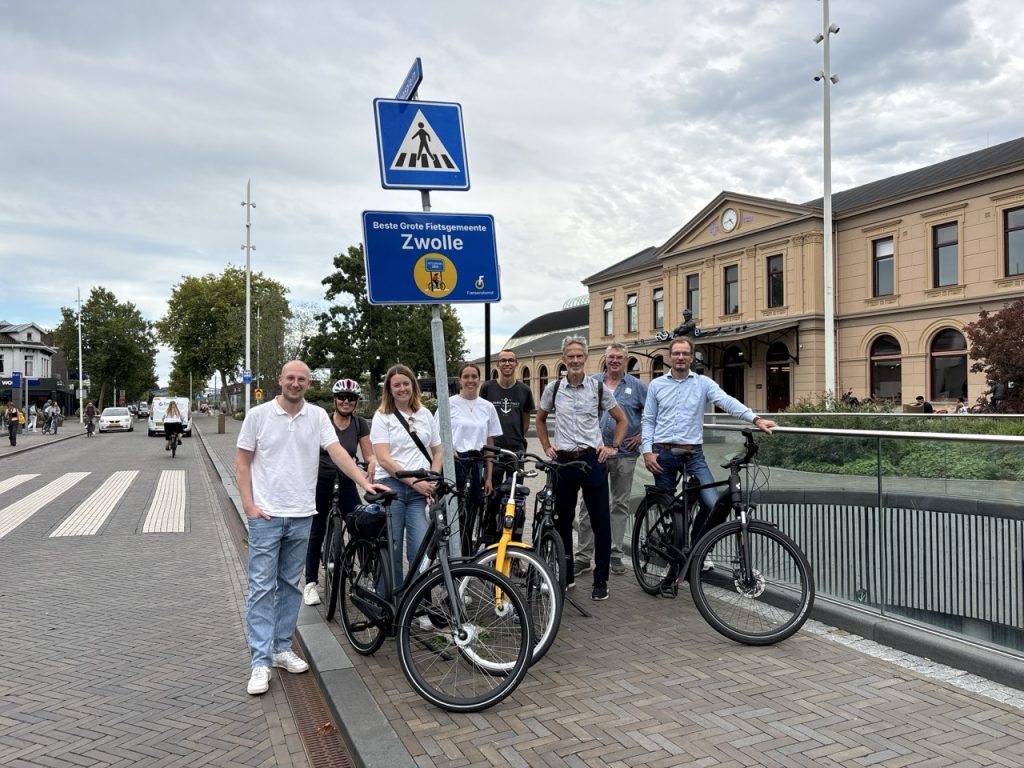
On 15 and 16 September 2026, our Study Tour brought together German mobility professionals for two days of presentations, discussions, and site visits by bike. Rather than focusing on individual infrastructure projects, we explored how mobility planning, urban development, public space, and regional collaboration work together to shape everyday travel.
A Study Tour offers something that reports and presentations cannot. It allows participants to experience mobility systems firsthand and see how planning decisions influence daily life on the ground.
We began at Zwolle City Hall, where participants had the opportunity to exchange experiences from their own cities and organisations. The opening conversations quickly revealed a common challenge: how to accommodate growth while working within limited budgets, staff capacity, and public space.
Kristian Dekker from the Municipality of Zwolle introduced the city’s long-term mobility strategy and explained how Zwolle balances urban growth, accessibility, and quality of life. The city is guided by four key ambitions:
One important lesson emerged early in the discussion: transformation is rarely the result of a single project. Instead, it comes from a clear long-term vision, consistent priorities, and a series of tangible improvements that demonstrate value to residents over time.
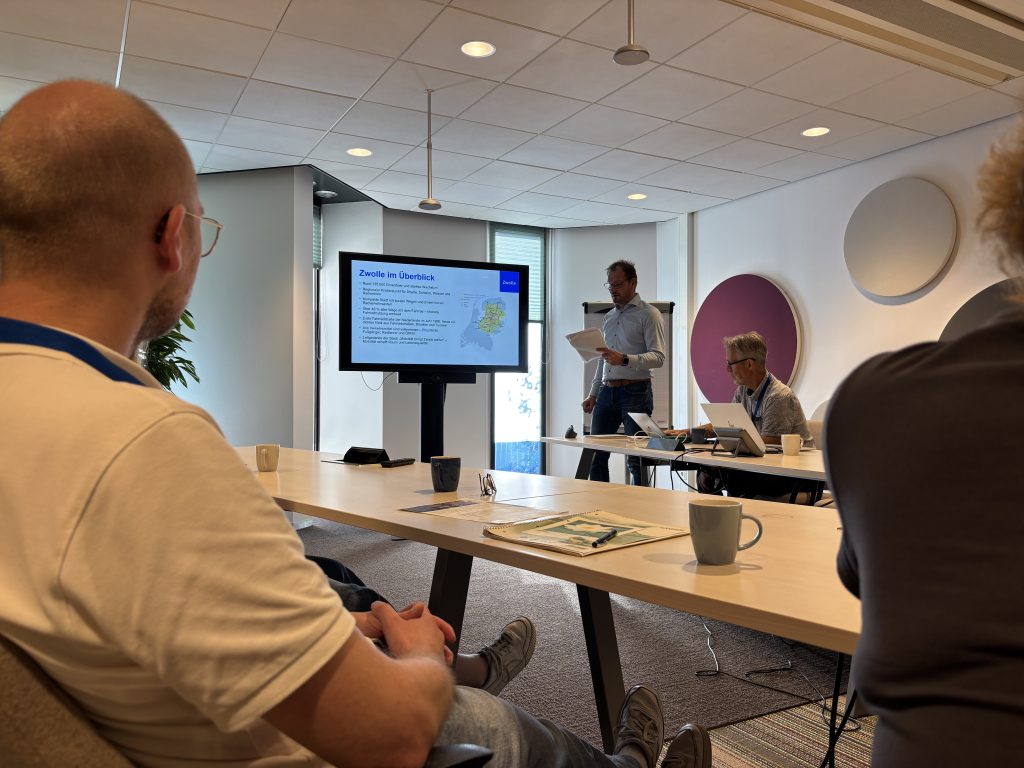
Otto expanded on how cycling fits into Zwolle’s wider mobility strategy. Like many growing cities, Zwolle faces important questions: How can new neighbourhoods be developed without increasing dependence on the car? How can limited public space be allocated effectively? And what alternatives need to be available if people are expected to choose other modes of transport?
In Zwolle, cycling is not treated as an additional option layered onto an existing transport system. It is one of the foundations of the system itself. The city focuses on creating a coherent network rather than isolated routes. Successful cycling infrastructure must be connected, direct, safe, comfortable, and attractive. When these qualities come together, cycling becomes an obvious and convenient choice for everyday journeys.
Equally important is integration. Cycling, public transport, walking, and driving are planned as parts of a single mobility ecosystem. Urban development, climate adaptation, and public-space design are considered alongside transportation objectives rather than as separate policy areas.
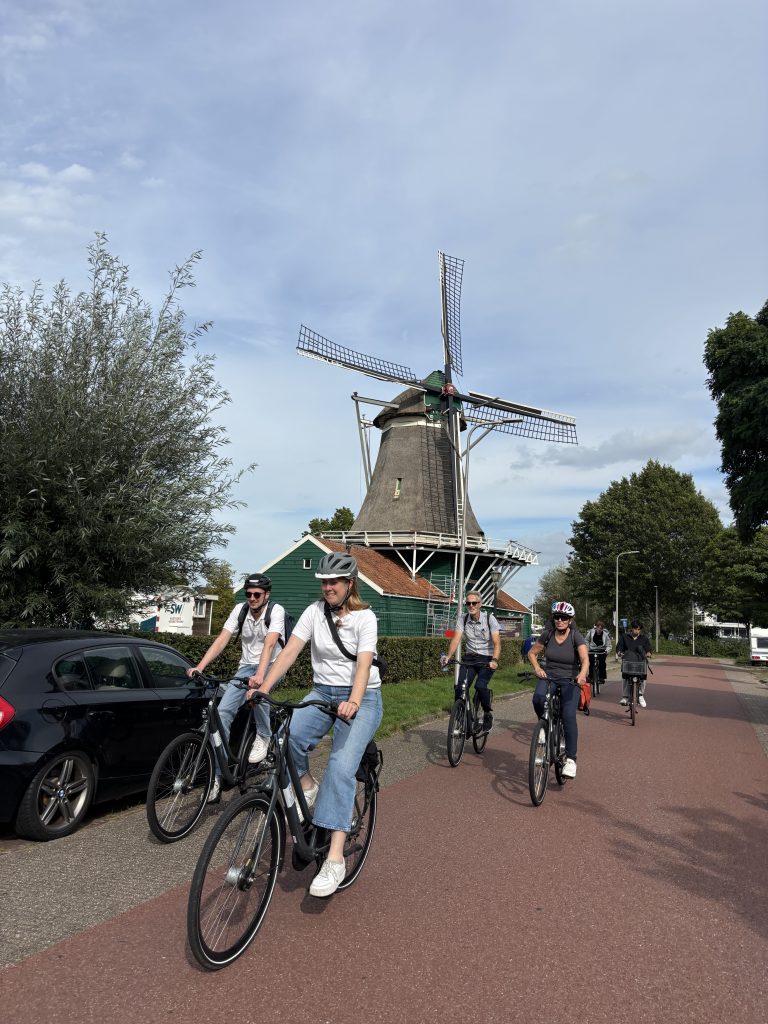
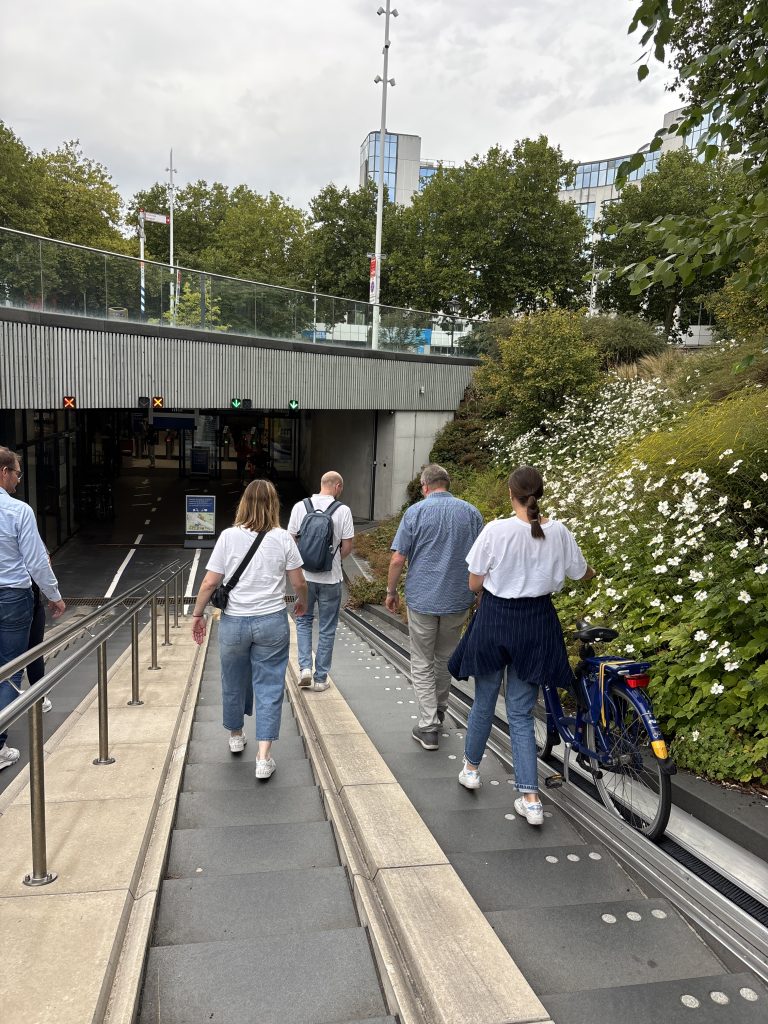
The cycling tour brought these principles to life. One of Zwolle’s most impressive examples of integrated planning is the railway station area. What was once primarily a transport interchange has been transformed into a well-connected urban space that combines multiple functions.
The redevelopment includes:
The result is more than an efficient mobility hub. It is a place that connects different travel modes while simultaneously improving the surrounding urban environment.
Another interesting stop during the cycling tour was Isala Hospital. Large institutions like hospitals generate significant travel demand and often struggle with parking pressure. In collaboration with Mobycon, Isala developed a mobility management strategy that recognises the different travel needs of its workforce.
Employees with realistic alternatives to driving are encouraged to cycle or use public transport through attractive incentives and support measures. At the same time, parking capacity remains available for people who depend more heavily on car travel because of distance or circumstance.
The approach combines “pull” measures, such as better alternatives and incentives, with “push” measures, including parking management. Rather than trying to eliminate car use completely, the goal is to make sustainable options the easiest and most attractive choice whenever possible.
On the second day of the Study Tour, we headed towards Stadshagen, one of Zwolle’s largest residential developments. Along the way, participants experienced a key principle of Dutch mobility planning: good mobility is created through a network of connected destinations and routes, not through a few flagship projects.
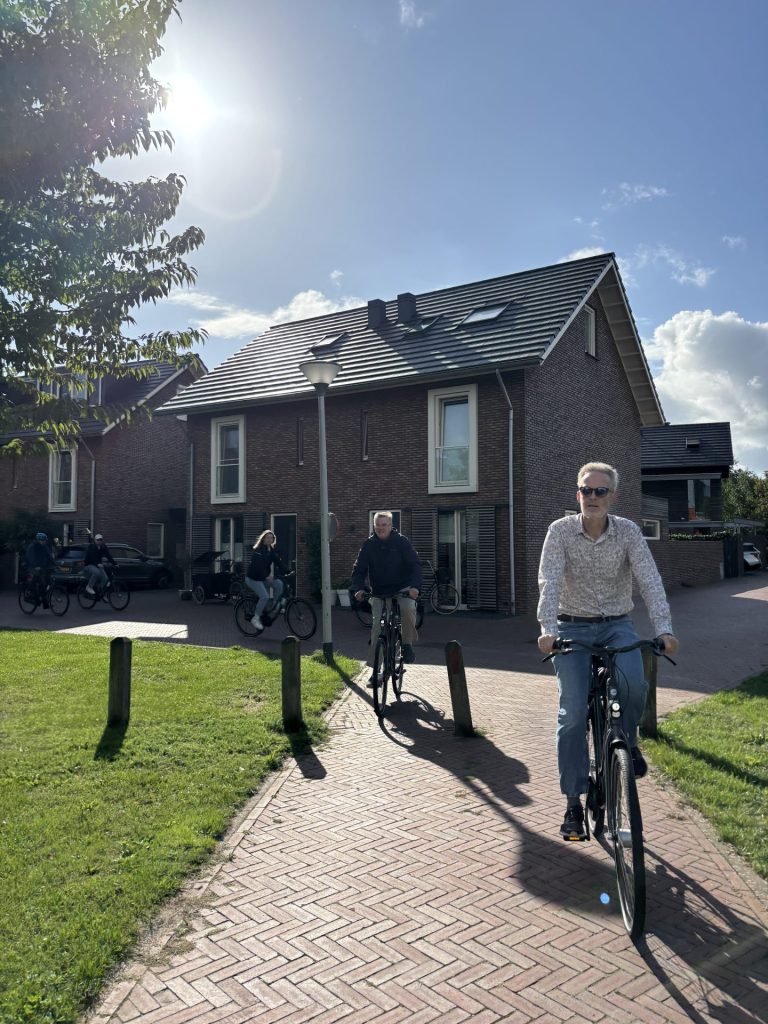
Since the mid-1990s, Stadshagen has grown into one of Zwolle’s largest residential districts. What makes the neighbourhood particularly interesting is that mobility, housing, public services, and amenities were planned together from the beginning. Many daily destinations are located within easy reach, making it possible for residents to organise their lives without relying on a private car.
The neighbourhood also offers a useful reminder that reducing car dependency does not require eliminating cars altogether. Instead, attractive alternatives must be available and convenient, while parking and vehicle access are managed in ways that support broader urban goals.
Perhaps the most powerful takeaway from Stadshagen was seeing how strongly urban design influences mobility behaviour. When walking and cycling are easy, direct, and enjoyable from the very beginning, people naturally have more options in how they choose to travel.
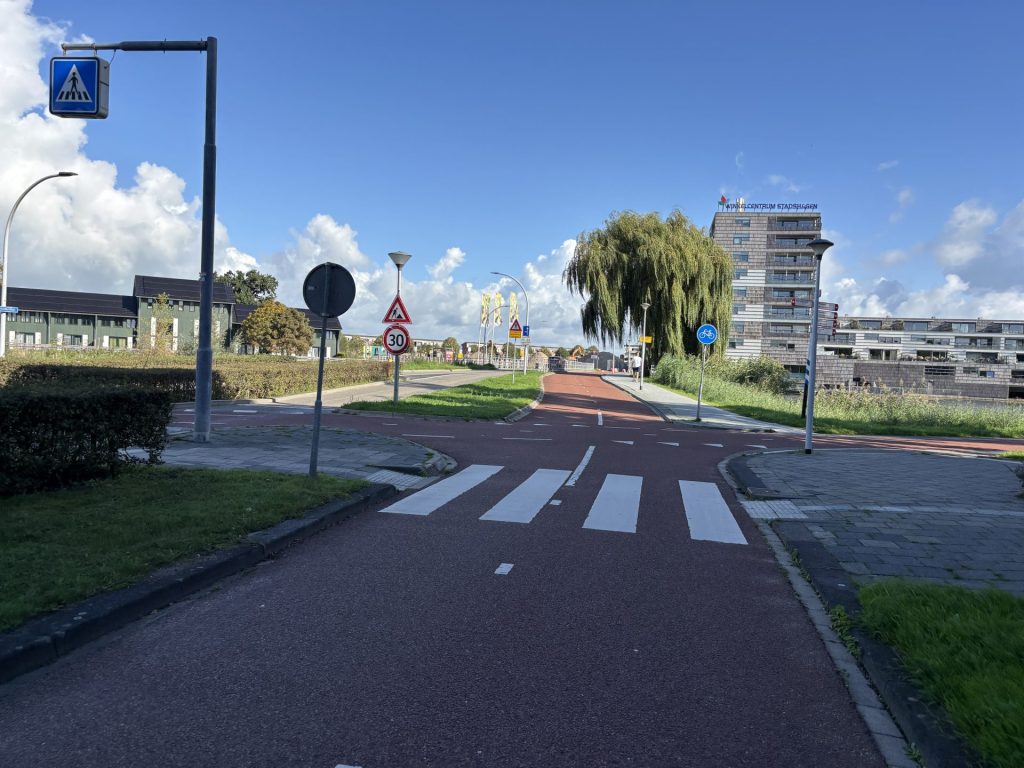
Perhaps the most important insight from this Study Tour was that sustainable mobility is never the result of a single intervention. It emerges from the combination of integrated planning, political commitment, urban development, and thoughtful allocation of public space.
Zwolle demonstrates what becomes possible when cycling is viewed not simply as a transport mode, but as an integral part of creating a healthy, accessible, and livable city. The goal is not to copy Dutch solutions exactly. Every city operates within its own legal, spatial, and political context. The real value lies in understanding the underlying principles and exploring how they can be adapted locally.
That is precisely why Study Tours are so valuable. They combine professional knowledge with firsthand experience, while creating space for meaningful conversations between the people shaping mobility in their own cities and regions. We look forward to welcoming participants on future tours and continuing the discussion about the future of mobility.
Through the Mobycon Academy, we regularly organise Study Tours, masterclasses, training programmes, and webinars. If you would like to learn more about upcoming events, or if you are interested in organising a tailor-made study tour for your own team or organisation, we’d love to hear from you.
Get in touch to start the conversation.
 ">
“Sustainable mobility for all – that’s what matters for me. The base for this is the combination and integration of the sub-systems walking, cycling and public transport in one sustainable mobility system. This is also crucial for the achievement of the Sustainable Development Goals.”